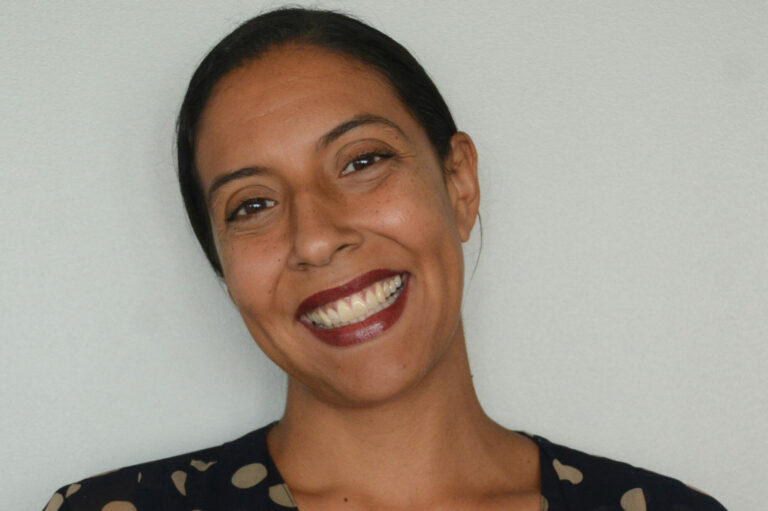

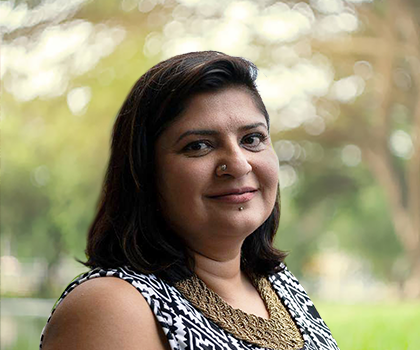
Over the summer, RISE Together Fund was thrilled to welcome Urooj Arshad as its first capacity building officer. Urooj is an award-winning activist who has dedicated her career to improving and raising awareness of the rights the Muslim LGBTQ community. Urooj shares her thoughts on bringing her experience to this new role with RTF and what drew her to it.
Growing up in the U.S. as a young queer woman from Pakistan, I experienced firsthand the impact of post-911 anti-Muslim bias. After graduating from college, I worked on LGBTQI+ rights in the U.S. to address systemic inequalities that affect Black LGBTQI+ youth, and since then, I have spent the vast majority of my career building capacity, non-profit infrastructure, and supporting activists, human rights defenders, coalitions, and organizations in the U.S. and globally. I am also the co-founder of the Muslim Alliance for Sexual and Gender Diversity, which addresses the intersectional impact of anti-Muslim bias, homophobia, and transphobia.
In this role, I had the opportunity to receive a rapid response grant from the RISE Together Fund in the aftermath of the 2016 shooting in Orlando at the Pulse nightclub. I was inspired by not only the rapid response nature of mobilizing the funding for us to respond to this crisis, but also the capacity building support that came along with it, and the unwavering commitment by RTF to center LGBTQ Muslim voices. My last role before joining RTF was at USAID. Experiencing firsthand the dissolution of an agency led me to seek a role with the RTF team because I believe that inclusive BAMEMSA communities are stronger and better equipped to build power toward a just and inclusive multiracial democracy.
This is a critical moment for the BAMEMSA civil society – the rise in authoritarianism in the U.S. relies on anti-Muslim, racist, and xenophobic tropes that impact our communities. RTF grantees are not only fighting against this onslaught of attacks but are also integral to the work that ensures that democracy not only survives but is even more powerful and vibrant. I am excited to work alongside the RTF team and my Proteus colleagues in strengthening the effectiveness, sustainability, and impact of nonprofit organizations and networks within the RTF ecosystem.
I appreciate RTF’s approach to grantmaking that is steeped in relationship-based philanthropy. As a grantee, it was both the rapid response grant and the accompaniment, including support on crisis response communication, that made all the difference during an intense time for MASGD and the LGBTQ Muslim community. More broadly, in my time working on LGBTQ Muslim issues over the last few decades, I have learned that internal organizational challenges due to interpersonal conflict, chronic under resourcing and structural inequities, if left unaddressed, can cause reputational damage, program closures, and risk to wellbeing, including burnout, which ultimately affects the sustainability of our movements. Often, this nexus of interlinked factors is challenging for funders to support, but in my work over the last six years in the global space, I have seen how the ideas of holistic wellbeing and collective care have become integrated with the idea of sustainability of our movements. In my role as Capacity Building Officer, I am excited to explore this aspect of supporting our grantees in greater depth.
BAMEMSA communities are at the forefront of both being targeted to fuel the White Christian Nationalist agenda while also defending democracy and the rule of law. Philanthropy’s bold and expansive support is critical at this moment to sustain this work and build power toward a just and inclusive multiracial democracy. Robustly funded by regressive philanthropy, we are seeing a shift in the world order, the dismantling of democratic institutions, a disregard for the rule of law, and safety and security threats against activists, organizations, donor institutions, labor unions, and fiscal sponsors, but we are also seeing in real time how civil society is responding in new and creative ways to respond to this reality. Philanthropy can meet this moment by being nimble in its grantmaking and staying curious about the emerging needs, funding those needs in coordination with intermediary donors like RTF, whose understanding of the landscape allows for funding that is strategic and fit for purpose.