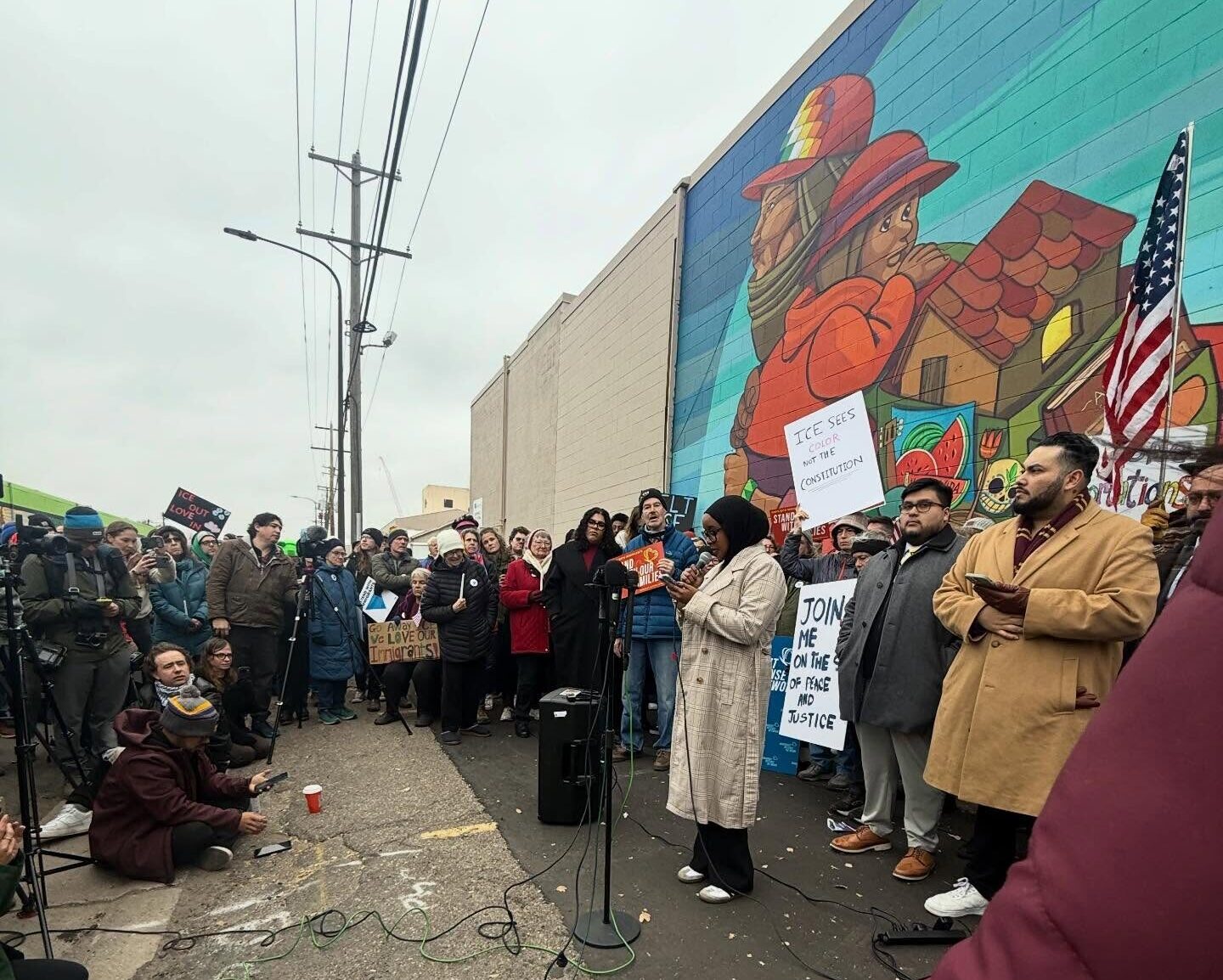
Toward the end of 2025, the administration’s increased use of dehumanizing language to describe immigrant communities alarmed leaders of Ayada Leads, a Minneapolis-based organization that empowers African diaspora women through leadership training and mentoring. Within a matter of weeks, federal agents began showing up in the Twin Cities under the guise of addressing alleged fraud within the Somali community but showed no signs of leading an actual investigation.
“What we saw was masked agents who were using tactics that were unknown to any of us, and what was said to last maybe a couple of weeks ended up being two and a half months,” said Habon Abdulle, Ayada Lead’s founder and executive director.
Abdulle says the negative impact of this escalation by law enforcement on the communities Ayada Leads serves was worse than what they had experienced in the months following George Floyd’s death.
“We couldn’t even go outside. Most of our community who are Black and brown or look like they may not be Caucasian, they were stopped for no reason and treated in a way that was unexpected. Fortunately, we had a plan in place.”
That plan included activation of the Immigrant Defense Network, a coalition of more than 90 immigrant, labor, legal, faith, and community organizations in Minnesota, including Ayada Leads. The coalition was formed after the 2024 election, when it became clear that anti-immigrant campaign rhetoric was quickly becoming policy. Even before the surge in Minneapolis, coalition members had begun preparing immigrant communities through Know Your Rights trainings, as well as trainings on how to become constitutional observers.
“Then when the large scale of federal enforcement showed up, that training became what we could do every week if not twice a week,” said Abdulle. “Those last two months, we stopped regular training or leadership training or anything else in the mission of our organization. We literally became a rapid response organization.”
Through its trainings, Ayada Leads helped people know what to do if agents stopped their cars or came to their homes. The trainings were shared through volunteer groups like the “Mamas of Cedar,” six women who took what they learned from Ayada Leads out into the community to help inform and protect their neighbors. The organization’s response also included mutual aid. Calls to action on Ayada Lead’s website and social media resulted in overwhelming support that helped enable them to provide groceries, baby formula, and other household items to people unable or afraid to leave their homes.
Despite agents being less visible now, the impact of their presence in Minneapolis and surrounding areas is still being felt. Community organizations like Ayada Leads are working to provide mental health and basic needs support to families who are now experiencing job loss and evictions after making the difficult choice to stay home from work. They’re also trying to build their internal capacity to expand Know Your Rights training opportunities, collect data on the harms done to communities, support multilingual access to information, and much more – all with depleted resources.