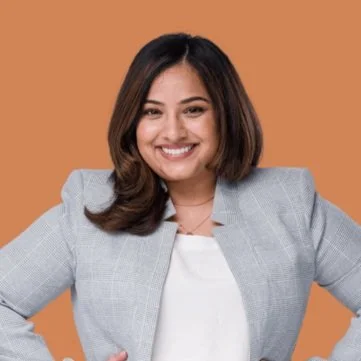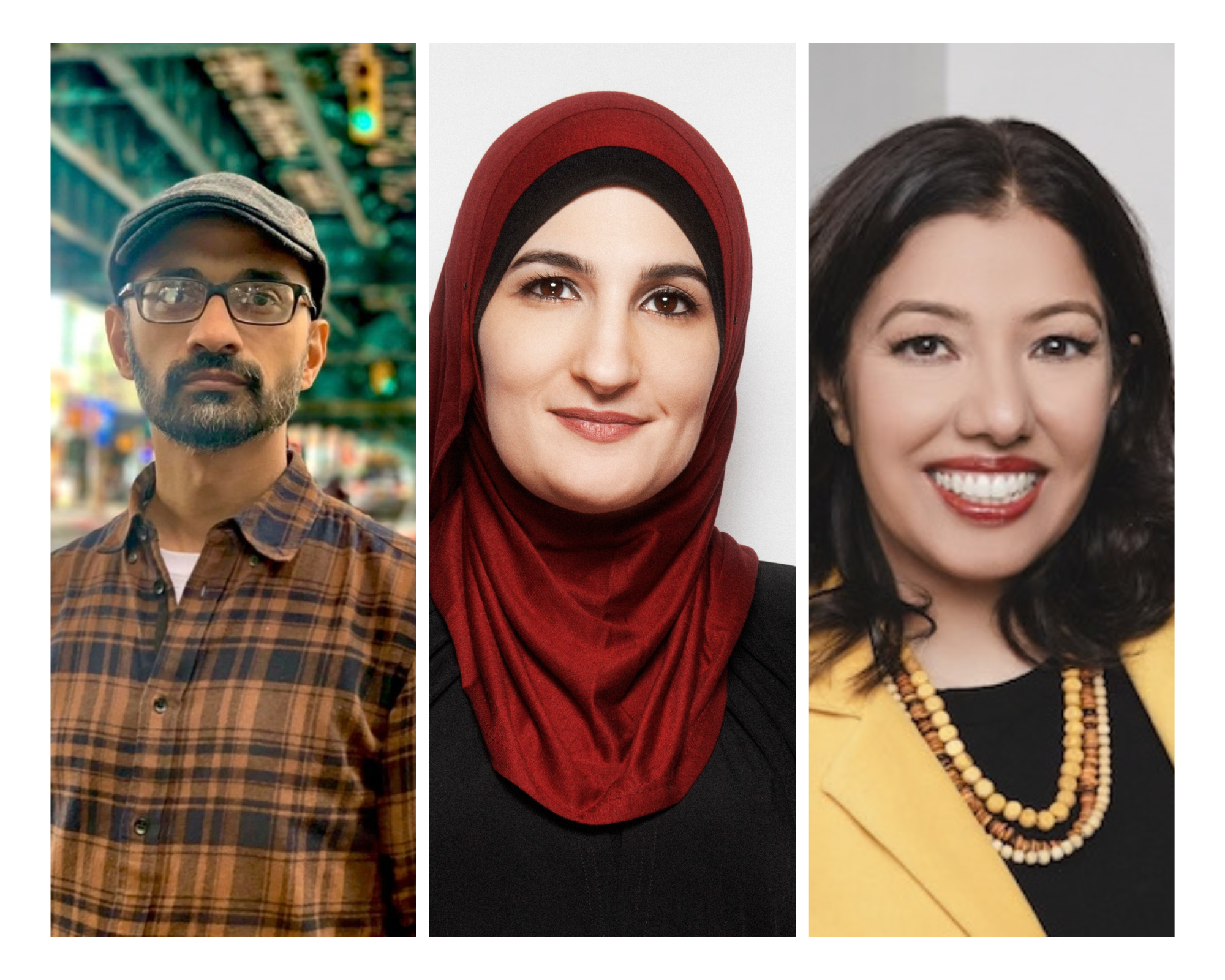
This year, Georgia Muslim Voter Project (GAMVP) is celebrating a decade of impact. Executive Director Shafina Khabani reflects on how the organization’s work has evolved over the last 10 years and the important role that coalition building plays in it.
We set out to build a civic home for Muslim Georgians, a trusted, nonpartisan place where people could learn, ask questions without shame, and act together. The vision was never limited to turning people out for one election. It was to build lasting civic power across race, ethnicity, language, age, and sect, rooted in the mosques, schools, businesses, and community spaces where trust already lived.
In our first year, GAMVP had no full-time staff, but we engaged nearly 40 mosques, registered more than 1,100 new voters, held 14,000 phone conversations, and knocked on more than 750 doors. Those numbers showed both the scale of the need and what became possible when Muslim Georgians were approached as a community with political agency, not simply as voters to contact before Election Day. Mosques that had rarely discussed voting began hosting civic education. Community members began meeting candidates and elected officials, asking questions about the decisions shaping their lives, and seeing public leadership as something that could include them.
The work continued to grow from that foundation. In 2017, GAMVP organized Georgia’s first candidate forum hosted at a mosque. Our Masjid Organizer pilot trained an organizer at each of four mosques, embedding civic engagement inside trusted institutions rather than relying only on outside outreach. In 2018, we brought together 35 Muslim organizers from 22 states to learn from one another, and we successfully challenged voter suppression in federal court. Each step moved us closer to the same goal: not merely increasing turnout, but building the knowledge, relationships, and institutions through which Muslim communities could exercise power for themselves.
The clearest measure of the work, however, is what changes for a person. Several years ago, Umer and I led a voter education session entirely in Urdu for about thirty elders at a mosque. One man had lived in this country for twenty years. He wanted to vote, but he did not understand the process and had never felt he had a place to ask. A few weeks later, he found me at the mosque, hugged me with tears in his eyes, and told me he had voted for the first time. Four years later, he votes in every election and brings his family with him. That is the arc we are trying to create, from a first conversation to a lifetime of participation and leadership.
Ten years later, that remains the heart of GAMVP. Our faith teaches us that justice is a responsibility we carry toward one another. We want Muslim Georgians to have the relationships, confidence, and organized strength to shape the decisions that affect their lives, and to stand alongside every community in Georgia fighting for dignity, safety, and a democracy in which all of us belong.
When GAMVP began, much of our work centered on the mechanics of participation: registering to vote, understanding a ballot, and showing up for elections far beyond the presidential cycle. Many community members had never received nonpartisan information that reflected their languages, experiences, or concerns. Building that basic access was necessary, but we learned quickly that information alone is not power. In our 2018 municipal work, phone calls reached a fraction of the people we reached at their doors. The lesson was simple and enduring: trust travels through relationships, and civic engagement works best when it is personal, local, and sustained.
The terrain has also become harder. Georgia has adopted new voting restrictions, including SB 202, while mass voter challenges, voter-roll removals, misinformation, and changing election rules create more points of confusion and exclusion. A law does not have to ban someone from voting to keep them from the ballot; it can add one more deadline, document, challenge, or reason for a voter who already distrusts the government to stay home.
These conditions required us to expand both what we do and how we understand the work. Registering a voter is important, but registration does not matter if that person is removed from the rolls, cannot understand a notice from their county, does not know what is on the ballot, or encounters a challenge at the polls. Civic engagement therefore has to include education, protection, advocacy, leadership development, and a trusted place to return with questions. It also has to continue between elections, when many of the decisions that determine access and representation are actually made.
That is why GAMVP has grown from a voter engagement project into a year-round civic institution. When SB 202 restricted giving food, water, and other assistance to voters waiting in line, we created Prayers to the Polls, gatherings outside mosques during early voting, pairing trusted information and rides to the polls with food, fellowship, and joy. The state tried to make helping voters illegal, so we made helping voters a community celebration. Through our Every Language Campaign, we communicate in Arabic, Farsi, Urdu, Tigrinya, Somali, Bangla, and Swahili (and more) because language access is part of what full participation requires, not an accommodation added after the fact.
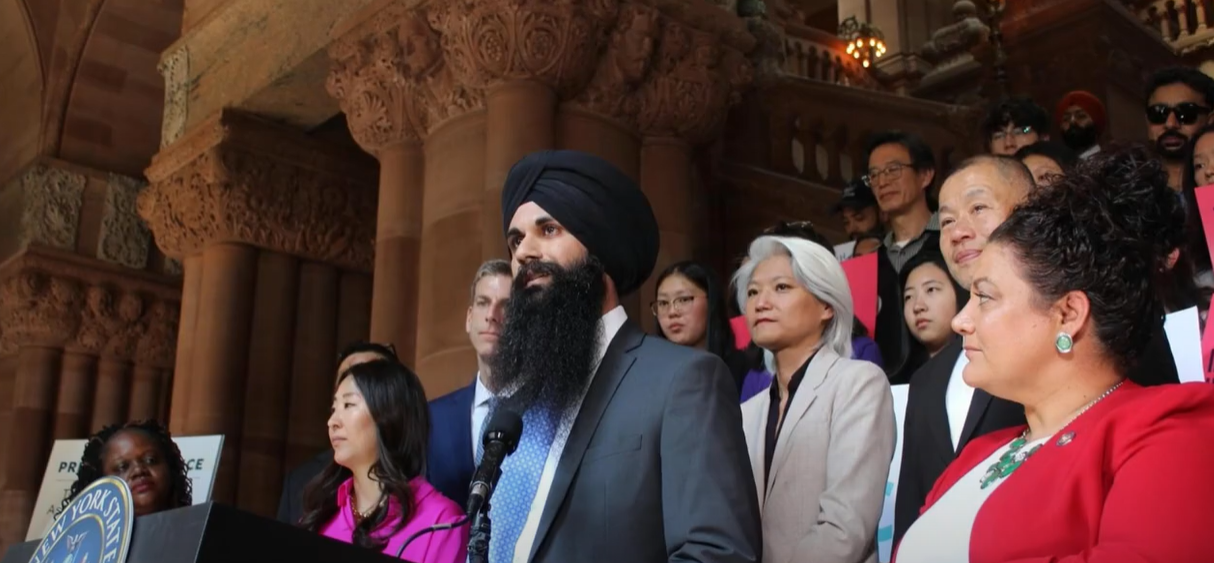
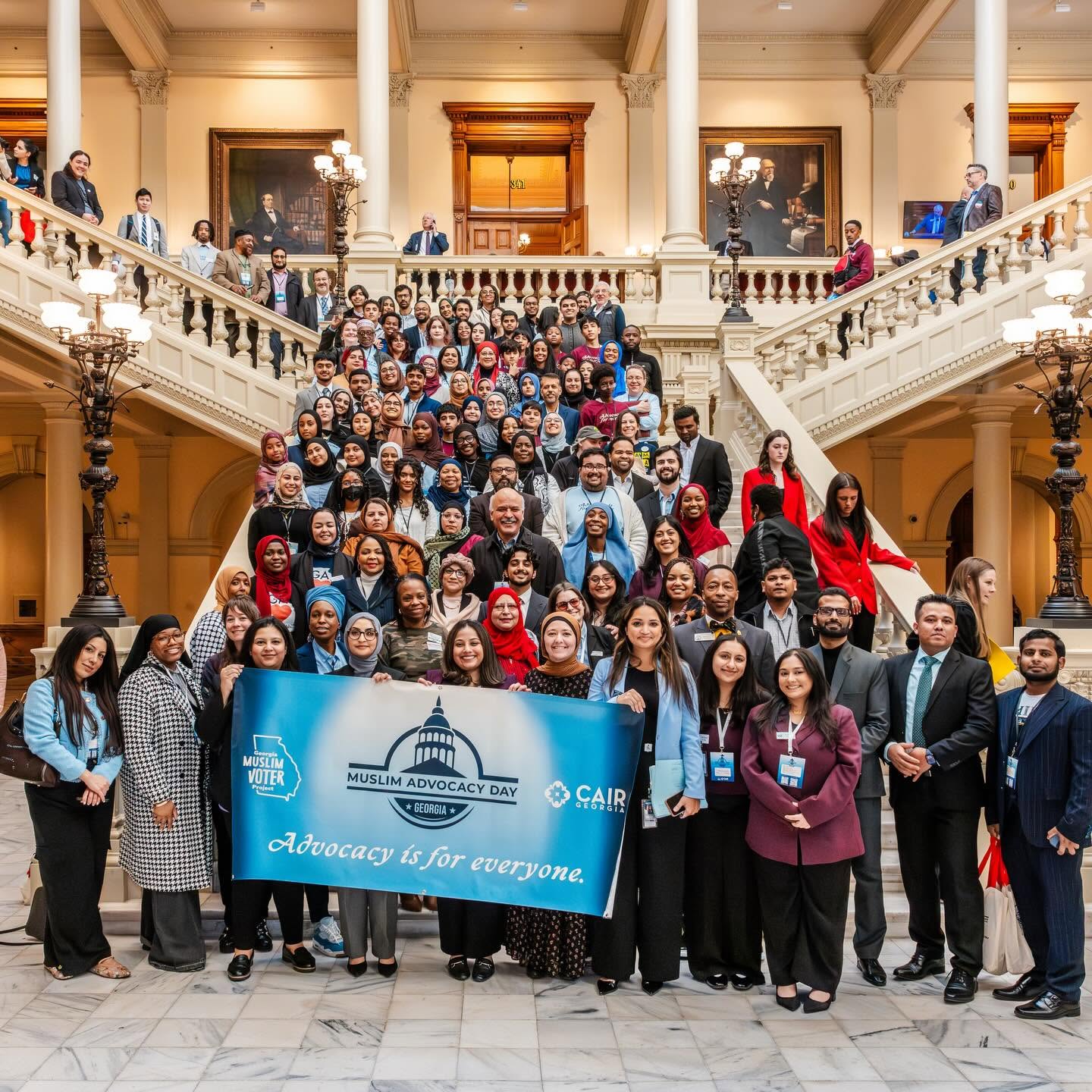
Today, voter education and registration sit alongside relational organizing, election protection, policy advocacy, and leadership development. Muslim Advocacy Day brings community members into the legislative process, often for the first time. Our Youth Ambassadors leadership program, Ummah Forward membership program, and Neighbor-to-Neighbor relational organizing program help people understand how decisions are made, practice telling their own stories, and bring others into the work. GAMVP staff helped draft the No ICE at the Polls resolution and secured its sponsor at the capitol, an example of community-informed advocacy moving from concern to concrete policy action.
We are also building beyond metro Atlanta, deepening relationships in Augusta and reaching Muslim Georgians in Savannah, Macon, Columbus, Albany, and other parts of the state. Organizing in the South means recognizing that communities outside major metropolitan areas are regularly asked to participate without receiving sustained investment. Elections matter, but civic power is also built in county election offices, at the State Capitol, in mosques and schools, and in the everyday conversations that help someone believe their voice belongs in public life.
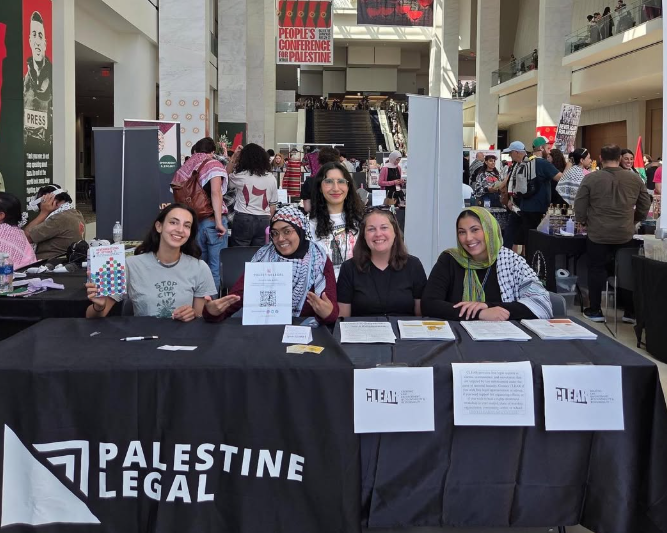
Coalition building is essential to GAMVP’s theory of change because no single organization can protect voting access, change public policy, and build durable civic power alone. We bring trust, cultural knowledge, and relationships within Muslim communities. Our partners bring legal expertise, data, election-administration knowledge, organizing capacity, and deep ties to other communities. When those strengths are brought together with shared purpose, we can identify gaps earlier, respond more quickly, and reach farther than any one organization can alone.
That was evident during Georgia’s recent redistricting special session, when a compressed political process demanded fast coordination. Through the Georgia Redistricting Alliance and other partners, organizations shared information, translated complex decisions for their communities, coordinated public education and advocacy, and created pathways for people most affected by district lines to make their voices heard. GAMVP’s role was not only to bring Muslim Georgians into that conversation. It was also to help make the process more accessible and accountable to communities that are often left out of decisions about representation. That kind of infrastructure matters in an election year, but it is built through years of showing up for one another.
This election cycle, we are coordinating voter engagement through the ProGeorgia state table and other statewide partners, preparing coordinated election protection coverage at priority precincts, and using the Georgia Muslim Civic Table to align Muslim-led and Muslim-serving organizations around shared needs. The Civic Table creates space for our community’s organizations to share information, identify gaps, and speak with greater collective strength. Our legal challenge to SB 202 with the Southern Poverty Law Center is still ongoing. Litigation can challenge an unjust system, while organizers help people navigate that system in real time and build the public will to change it. Voter education, election protection, advocacy, and legal action reinforce one another; none is sufficient alone.
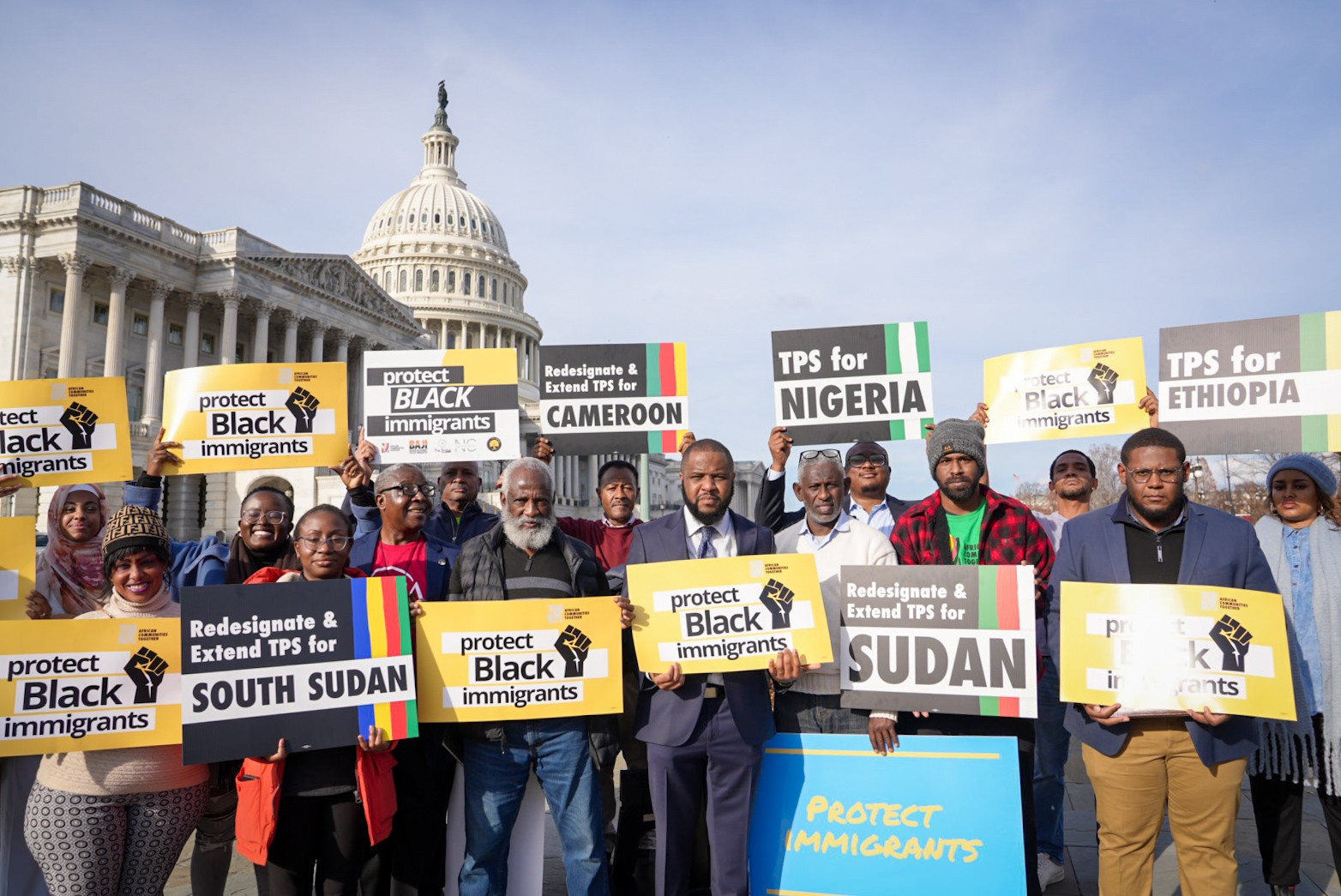
For us, a coalition is meaningful when Muslim communities help shape the strategy early, rather than appearing as a name on a roster or a constituency to contact in the final weeks of an election. Our faith teaches that our obligation to justice does not stop at the boundaries of our own community. Standing with Black Georgians, immigrant Georgians, and every community fighting for a more inclusive democracy is part of our mission—and those relationships make all of us harder to isolate, ignore, or divide.
Voting in Georgia can require more time, information, and persistence than many people have to spare. Voters face tighter absentee ballot rules, limited drop-box access, registration removals, mass challenges, changing procedures, and uneven practices across counties. Every added step creates another place where someone can be delayed, discouraged, or shut out. The burden falls hardest on voters who are new to the process, have limited English proficiency, lack transportation or flexible work hours, or have good reason to distrust government institutions.
Muslim and BAMEMSA communities face additional barriers. Anti-Muslim and anti-immigrant rhetoric can make a request for personal information feel dangerous, especially for families who have experienced surveillance, detention, displacement, or political violence. Some community members come from places where political participation carries real risk. We also continue to hear sincere questions in some mosques about whether voting is permissible in Islam. Those questions cannot be answered by a voter guide alone; they require trusted faith leaders and space for honest conversation. Others are disillusioned because they are courted for their vote while their deepest concerns go unheard. These are not signs that people do not care. They are reminders that trust has to be earned.
Even identifying the community is complicated because voter files do not record religion. Using the state voter file and a name- and genealogy-based model developed with researchers at UC San Diego, we estimate that approximately 100,000 registered voters in Georgia are likely Muslim. It is an estimate, not a definitive list, and that distinction matters. Data can help us find patterns, but it cannot replace relationships or define who belongs to our community.
GAMVP works to reduce the number of times a voter must navigate these barriers alone. We provide clear voter and ballot education in trusted spaces; communicate through multilingual calls, texts, WhatsApp groups, and in-person conversations; offer rides to the polls; help people check their registration; review challenged-voter lists; and coordinate election protection with legal and civic partners. When someone receives a confusing notice or learns that their registration has been challenged, our goal is for them to know there is a person and an organization they can call, not simply a website they are expected to decipher on their own.
We are also exploring a network of Civic Stations, self-service kiosks in trusted community locations where people could check registration, access reliable information, and print forms with support nearby. This is a planned initiative, not yet an active program. The idea reflects a larger lesson from our work: civic access is strongest when reliable tools are placed inside the institutions people already visit and trust.
The deeper solution is credibility earned over time. Our organizers return to the same mosques, campuses, businesses, and community events after the election is over. Relational organizers reach people who may never answer a call from an unfamiliar organization. At the same time, our policy, legal, and coalition work confronts the systems producing these barriers. Muslim voters should not need extraordinary time, knowledge, or courage simply to exercise a fundamental right.
RTF supported GAMVP before this work was widely recognized or adequately resourced. Its early general operating support helped provide a foundation for sustained organizing at a formative point in our development. During the 2018-2019 grant period, GAMVP registered hundreds of voters, expanded organizing in Bibb, Chatham, and Clarke counties, and supported a part-time organizer in Savannah. Just as important, flexible funding allowed us to learn from the field, adapt our methods, and invest in the relationships behind those numbers. It gave a young Muslim-led organization room to build, test, and grow without separating program outcomes from the organizational capacity required to achieve them.
RTF has continued to pay attention to the conditions that allow people and organizations to remain in this work: organizational structure, security, legal capacity, scenario planning, and staff wellness. That matters for a Muslim-led organization operating in a climate where our communities and staff can become targets simply for participating in public life. RTF has also created space for BAMEMSA organizations to learn from one another, speak honestly about the challenges we share, and understand our work in Georgia as part of a broader movement. That combination of resources, relationship, and trust is meaningful.
What philanthropy can do best is fund February. Voter contact in October rests on relationships built months and years earlier, relationships strengthened through community meetings, language access, leadership development, staff retention, careful data work, and the quiet act of returning when no election is at the top of the news. It also rests on organizational systems that keep staff safe, make programs accountable, and allow leaders to respond when laws or political conditions change. Much of that work rarely fits neatly into a short-term campaign grant, but none of the visible work is possible without it.
Multi-year general operating support gives organizations the freedom to plan beyond the next grant deadline, retain people who hold years of community trust, and respond when the political environment changes. The strongest philanthropic partners trust Muslim-led organizations to define what power building requires in their own communities. They invest before a crisis makes the need visible, support multilingual and regional organizing that may take years to mature, and include BAMEMSA organizations in broader democracy and justice funding as essential partners rather than an afterthought.